The pilgrimage to Kasi, the temple town of Lord Shiva is a much renowned pilgrimage to Hindu's who believe in the Moksha by surrendering oneself to the immense power of the Ganges flowing through the City of Varanasi. To many others, it is a tourist destination, to rediscover the rawness and meaning of being humans above anything else. Varanasi gives you a delight of understanding the human form and its beginning, existence and the end. In the end, what matter is taking you back to the very beginning, unison in the waters of life...thereby cleansing your soul.
This is the sentiment of a Hindu, who takes a pilgrimage to Kasi.
From a tourist perspective, a weekend in Kasi is worth all the efforts you spend on the trip. If you have just 2 days, and still want to have an experience worth having, continue reading!
Reaching Varanasi
Plan to reach Varanasi early in the morning, taking an early hours flight. Varanasi airport is 22 kms away from the city, and the only possible transport is hiring a taxi, which starts from Rs 600 and above depending on the destination. Varanasi also has a well connect Railway station and Bus Stand from various part of India that makes the travel possible for all.
Stay in Varanasi
Varanasi is a city where you can live in free ashrams, choultries and end number of small hotels that provide accommodation. There are also very decent hotels and cosy places depending on your budget and preference. Staying closer to the main area around Kasi Vishwanath temple makes your access easy. However, if you would prefer to stay away in the nights from the humdrum of the city, you can also take hotels in the Cantonment area, a little far from the main tourist attraction. Dolphin International, Hotel Ganges Grand, Hotel Ashoka are closer. Radisson and other primer hotels are little away but accessible to the city.
Food & Specialties
You have loads and loads of chat places that serve varieties of North India culinary experiences with their Pooris/ Bajji along with hot Jelabi's in the morning ( We have seen this as common breakfast preferred), followed by Chai in clay pots (muttkas) that give you a different taste to the tea, and the lip smattering Lassi (Curd based churned (Yogurt) mixed with a pinch of salt and loads of sugar,
, and topping with the Cream/ Butter or Kova (condensed milk with sugar).
We literally survived on this chilled lassi during the hot afternoons.
I also heard that they have lassi topped with Ganja(some kind of
substance - ugh)..so beware when you get your glass of lassi.
Rice, dal, Rotis, variety of dosas, samosas, poori's , potato curries and
loads of Rasagulla's, Kachories, Gulab Jamun's make your lunch. You
also have best of hotels for South Indians like Hotel Annapoorna and Kerala
Cafe that caters to your typical south/ north Indian cuisine. My two cents would always go to the amazing Aloo Thikki's and Onion Kachories with the hot tea in the matkas!
Must See Places
1. Amazing Ganges and 80+ Ghats
The boat ride in Ganges gives you a wide glimpse of the Varanasi skyline with its beautiful ghats and each ghat has its own significance and story. The Ghats, we visited were Kedar Ghat, Dashashwamedh Ghat and Harischandra Ghat. Manikarnika (site to see never ending cremations) , Hanuman, and Assi Ghats are also said to be of high significance. Every ghat has its own temples and historical significance.
One big change is that there is no live burning of bodies seen this time, because the Ganges was overflowing, nextly there is ban of pushing the dead bodies in the ganges which is actually making offering prayers at the Ghats was more peaceful and taking bath was also not uncomfortable
Keeping Ganges clean is not only a Government project but a responsibility of every citizen and I think the constituency being that of Modiji is actually bringing in the much awaited changes in Varanasi
 |
| Raghu at Kedar Gath..flooding ganges behind..a km away from Harischandra Ghat |
2.
Temples
After completing the rituals on the Kedar Ghat, and taking a bath in Ganges, we headed first to
Kasi Vishwanath Temple : One of the 12 Jothirlingas, the amazing Lord Shiva Temple tucked inmidst of narrow lanes of Varanasi have the Golden Gopuram weighting 920 kgs and within the premises, visit the Nandi facing Lord Shiva, Banyan tree, Lord Hanuman temple and many other small temples around. The Vishwanath Temple of Kasi (Varanasi) is one of the oldest and most
sacred Hindu temples in India. On an average the number of devotees
visiting the temple each day ranges from a few thousands to about
100000 (on special occasions).
Mata Annapoorna Devi Temple: Goddess Annapoorna is the ruling Goddess of Varanasi said to be relieving the hunger of the living beings. The temple offers prasad and rice to the visitors and offers every day food to elderly and destitutes. Located quite close to the Vishwanath Temple, is the Annapurna Devi
temple where the Goddess Parvati is worshipped as the giver of food and
nourishment. Devotees come here in hoards and donate freely.
Visalakshi Temple – The Kashi Vishalakshi temple is
one of the acclaimed Shaktipith temples in the country. This
traditional south Indian style temple has many miraculous stories about
it and is a favourite with devotees from all over the country. Believed to be maintained by Nattu Kotta chettiars and seems to be sending offerings to Kasi Vishwanath temple thrice a day even today.
Sankat Mochan Temple – The Sankat Mochan Hanuman
Temple of Varanasi is said to have been established by the renowned
saint Goswami Tulsidas and reconstructed by Pt. Madan Mohan Malviya in
the early 20th century. The devotees who throng the temple feed the
hundreds of monkeys who live here. The temple was the site of a
terrorist attack in March 2006 and hence under high security now..
Kaal Bhairav Temple – The Kaal Bhairav temple is
one of the oldest temples in Varanasi. Kaal Bhairav is believed to be
the guardian of the city and is the protector of devotees in trouble. Here we can worship the Lord to wade away evil and pain. Feeding of prasad to dog's at the temple entrance is sight to see.
Tulsi Manas Temple – The Birla Tulsi Manas Temple
is another famous pilgrimage centre in Varanasi. It was built in 1964
and is dedicated to Lord Rama. Tulsidas’ famous Ramcharitamanas is
inscribed on the walls of the temple. The main deity here is Swami Satyanarayan and unlike other temples, this temple complex is airy and vast.
Durga Kund Temple – The Durga Mata Temple in Durga
Kund is another one of the important temples in Varanasi. It is near the
Tulsi Manas Mandir. On special days a procession heads out from this
temple to the Durga Temple. The Red walls of the temple and the amazing deity makes it look powerful.
Bharat Mata Temple – This is a unique temple
dedicated to Mother India (Bharat Mata). Nowhere else a temple dedicated
to the motherland. The temple was built in 1936 in the Mahatma Gandhi
Kashi Vidhyapith. Gandhiji himself inaugurated the temple. The India map built on the floor is worshiped here. However, we felt very sad to see that this temple is not maintained well and has lowest footprints.
Tridev Temple – It is very rare that we find a Hindu
temple dedicated to all three Gods of the Trinity – Brahma, Vishnu, and
Shiva. Varanasi’s Tridev temple is unique in this respect and is visited
by hundreds of devotees each day.
Other temples around include:
- New Vishwanath Temple – The New Vishwanath Temple
in the campus of the Banaras Hindu University was constructed by the
educationist, Madan Mohan Malaviya with the help of the Birlas. The
tower of the New Vishwanath Temple is said to be the tallest temple
tower in the country.
- Mrityunjay Mahadev Temple – Shiva is known to
assume many forms; one of these is that of Mrityunjaya – the one who
achieves victory over Death itself. This temple dedicated to Shiva in
the form of Mrityunjaya, is visited by devotees in great numbers who
pray for good health and a long life.
- Nepali Temple – The Nepali Mandir in Lalit Ghat is
also known as Mini Khajuraho. The terracotta, wood, and stone Pagoda
style temple was constructed by the King of Nepal, Rana Bahadur Shah, in
the 1800s and is dedicated to Lord Shiva.
- Plenty of Hanuman Temples, Ganesha Temples and Goddess Kali, Durga and Maa Ganga you can see around
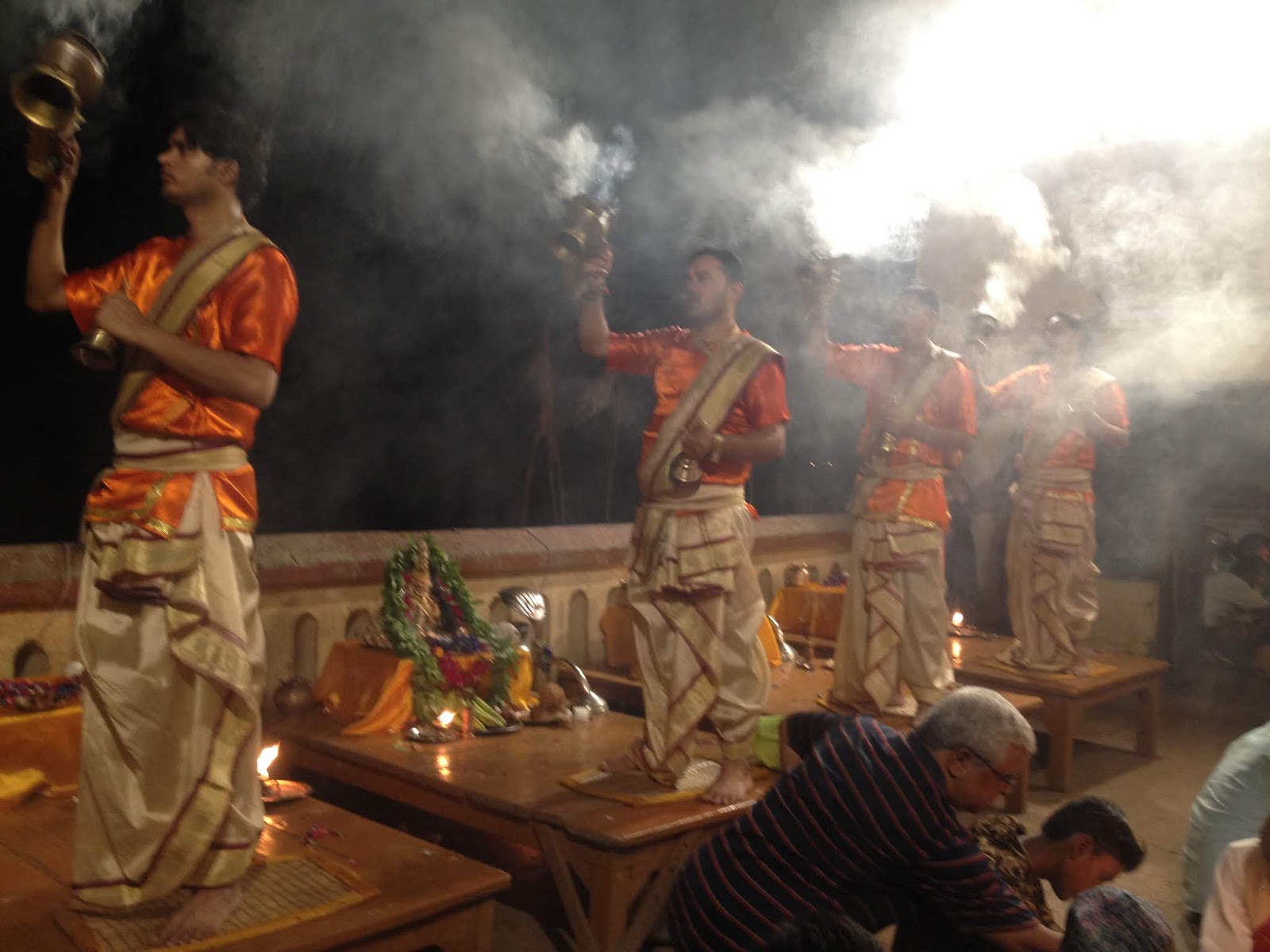
3. Evening Ganga Aarthi (6.45- 7.45 pm every day at Dashashwamedh Ghat)
We were so blessed to see this Aarthi, sitting just behind the priests performing the same and Raghu had the blessing of lighting the lamp used for the ritual.
Ganga Aarti Varanasi (Benaras, Kashi ) is the Hindu
religious ritual of worship for the holy river Ganges. The ceremony
happens everyday from 6.45 -7.45 pm at Dashashwamedh Ghat on the Ganges
river banks.
A must watch event while in Varanasi, and is enjoyed by
locals and tourists from all over the world.
Dashashwamedh Ghat is the main ghat in Varanasi on the
Ganges River. It is located close to "Vishwanath Temple" and is probably
the most spectacular ghat.
Two Hindu mythologies are associated with
it: According to one, Lord Brahma created it to welcome Lord Shiva.
According to another legend, Lord Brahma sacrificed ten horses during
Dasa -Ashwamedha yajna performed here.
Aarti is said to have descended from the Vedic concept of fire rituals,
or homa. In the traditional Aarti ceremony, the flower represents the
earth (solidity), the water and accompanying handkerchief correspond
with the water element (liquidity), the lamp or candle represents the
fire component (heat), the peacock fan conveys the precious quality of
air (movement), and the yak-tail fan represents the subtle form of ether
(space). The incense represents a purified state of mind, and one's
"intelligence" is offered through the adherence to rules of timing and
order of offerings. Thus, one's entire existence and all facets of
material creation are symbolically offered to the Lord via the Aarti
ceremony.The word may also refer to the traditional Hindu devotional
song that is sung during the ritual.


Our visit was to immerse my amma's ashes in the Ganges and do the rituals on the ghats of Ganges and pay our tributes as she was a keen believer in the salvation on the banks of Varanasi. Despite her ill health and age, she managed to go to Kasi 4 times and never complained on any of the discomforts during those trips as she had challenges in walking, eating outside food, using public toilets and staying with many other elderly travel companions on the group tours and on limited budgets. Today, being there, I wonder how she managed it so gracefully.
I would recommend readers here to help your parents or elder people wanting to visit Kasi, to manage logistics and if possible, accompany them and do your best.
May the Lord Shiva grace you with his blessings! Om Namashivaya!