Monday, April 23, 2018

Technology Trends that dominate 2018 and going forward

In the age of disruption, businesses and their leaders will rise or fall based on their ability to spot and creatively respond to rapid technological change. Some companies notice an emerging technology and take a “wait and see” attitude. Others see a new technology and take action. They begin experimenting, making small bets, and learning.
Their attitude is that it’s never too early to start. It’s never too early to begin looking at what others are already doing. It’s never too early to engage the imagination to conceive of how the new technology could be used to create competitive advantage.


These "fast movers" often jumpstart creative applications by asking themselves leading questions such as:
  • Where is this technology likely to be in five years?
  • When will it become mainstream?
  • How might it help us differentiate, and to add value to customers? To improve speed of satisfaction, manage choice and complexity, and enhance customer experience?
  • How will/could this new technology help us gain productivity and become a better place to work?

With such questions in mind, what follows are eight technologies that are ripe for exploitation by your company in 2018, and beyond:

1. Artificial Intelligence (AI) is about to go mainstream.
Real Estate giant Coldwell Banker is experimenting with AI to target classes of likely buyers for a specific property, and piloting new AI software that helps identify likely sellers. Leading law firms use AI to scan thousands of legal documents in minutes, rather than weeks, to build stronger cases at a fraction of the cost.
While Netflix, Amazon, Google and Facebook pioneered artificial intelligence, AI is beginning to be deployed by increasing numbers of mid-sized and even small businesses. Here, the applications are exploding.  At Coldwell Banker, when their data shows a confluence of events, the software alerts the company to a likely new prospect. For example, the homeowner’s youngest kid just went off to college. The couple has been in their home beyond the average of 10 years.  And it sees that the couple has been online browsing for properties in North Carolina. AI brings these data-points together and concludes that this household is likely to be selling soon. “If we can find those people before they even know they’re selling, we’re that much ahead,” Coldwell Banker CEO Charles Young tells Chief Executive Magazine.

2. Apps are becoming essential tools for boosting customer convenience and employee productivity. What are you app to do next?
Fort Worth, Texas-based startup Booster Fuels saves time-strapped motorists a trip to the gas station. When you order fuel on your Booster app, they bring the gasoline to you. Startup businesses like Booster Fuels are taking advantage of the app trend to address unmet customer needs. And established companies like Safeco auto insurance are finding new ways to use apps to add value to customers — and improve worker productivity.
Safeco’s auto insurance customers can now report an auto accident using the company’s app. Right from the accident scene, customers can submit photos, report what happened, and arrange for a tow — all by using Safeco’s innovative app. Fast movers will increasingly use mobile apps for on-the spot-troubleshooting, managing inventory, providing on-site estimates, generating invoices, and gathering data that can be used to better understand customer preferences.
Pest control operator Rentokil uses a proprietary app to give its field technicians a productivity edge. When confused by a type of bug or rodent, they simply snap a photo and run the app, which sifts through a data-bank of pest images to quickly identify the intruder. The app even suggests remediation solutions. Voila, problem solved.

3. Wearable technology. Already enhancing guest experience at Carnival Cruise Lines.
Modern cruise ships carry over 6000 passengers and offer everything from violin concerts to bungee jumping to belly dancing classes. But there’s a problem. Carnival Cruise Lines’ research showed that so many choices were overwhelming guests and creating an anxious-prone customer experience. So, Carnival created a wearable technology to help customers avoid “over-choice.” Passengers are given the option to wear a wristband device synced with a companion app on their smartphone to serve as a kind of constant guide while onboard. As you partake of various onboard activities, the wearable tool responds by guiding you to activities that you’re bound to like, providing a new level of customized service for passengers. Result: Carnival customer data shows that guests come away happier, less stressed, and more apt to return to Carnival for their next cruise.

4. Big Data is empowering Starbucks’ location scouting. What’s your next move?
Ever wondered how Starbucks can open multiple shops in the same neighborhood without cannibalizing existing store traffic? Answer: they use big data.
Until now, big data was available exclusively to big companies. No longer. As more and more digital data gets collected (as when you give your phone number to the clerk at the grocery store), mid-sized and even small firms are now able to tap the power of big data analytics to carve out new strategic advantage: to lower the cost of customer acquisition, find new ways to cut costs, increase sales, personalize product offerings, and enter new markets.
Starbucks was a first mover in using big data to give their location scouts a tool to reduce guesswork. Big data — the technology that allows more people to analyze more information from more sources in more ways than ever before — helps Starbucks’ staffers crunch data on foot traffic patterns, area demographic trends and customer behavior profiles, greatly reducing the complexity of decision making.

5. Amazon’s Alexa is bringing the Internet of Things (IoT) to consumers living rooms. Now may be your time to jump aboard.
In November 2017, Enrichment Federal Credit Union became the first credit union in the United States to link to Amazon’s Alexa voice-controlled smart speakers. Members of the Oak Ridge, Tennessee-based credit union can now move money between accounts, make loan payments and access balances and account histories using convenient voice commands.
Enrichment’s move is just the latest application of an exploding techno-trend where tiny sensors embedded in homes, buildings, and everyday objects such as smartphones, are connected via the internet, to comprise what is being called The Internet of Things (IoT). While Alexa is out front, Google’s Assistant is coming on strong, followed by a host of others just now entering the race to wire the living room.
IoT technology first burst on the scene in 2015, when a startup called Nest reinvented the thermostat and made it “smart,” which is to say programmable, and connected via the internet to the consumers smart phone, and voice-controlled speaker. Nest went on to reinvent smoke alarms, home security and a growing list of other products, and the technology is exploding. In home security, for example, for a fraction of the cost of traditional home security- service, consumers can set up the new do it yourself system — you set up the alarm system yourself by placing the easy to use sensors and cameras and motion detectors around your home, and connect to a control hub, and an app on your smart phone.
Look for ever increasing numbers of homes to be united with the IoT, and new entrants wishing to dance in Alexa's space.

6. Advanced robotics. Not just for factories now.
Hotel chain Aloft uses robotic bellhops to supplement their bell staff — delivering extra towels, keys and whatever else to guest rooms without delay. Suddenly, agile, trainable, lightweight robots aren’t just found on the factory floor, they’re showing up everywhere. And they won’t replace workers in most cases, they will enable smarter labor deployment by taking on repetitive, backbreaking and higher risk tasks and introducing logistical efficiency. In many a business, the question is not: will we or won’t we? The question is: where will we and when will we deploy robots, and in what kinds of uses do they make the most sense?

7. Drones. Not just for the military anymore.
While Amazon's drone delivery seems to be stalled by regulators and other hurdles, last year, a New Zealand couple became the first persons to have a pizza delivered by drone. The successful delivery came just three months after Domino's announced a partnership with a local drone delivery service. Suddenly drones — aircraft without a human pilot aboard — are everywhere. The commercial drone industry already touches almost every sector of the economy, 38 types of businesses have already been approved for drone operations, and the industry is poised to be one of the fastest-growing sectors in the U.S. From inspecting infrastructure, to providing farmers with aerial views of their crops, to enabling rescues of swimmers in heavy surf, to allowing law enforcement agencies greater access to monitor criminal behavior, it’s no wonder businesses — small and large are clamoring to use this technology.

8. Virtual Reality. The possibilities are virtually limitless.
Home improvement pioneer Lowe’s created Holoroom, where customers plug in the dimensions of a room and can then see a VR mockup of their renovation plans, transfer design to Google Cardboard and take the VR mockup home. Cirque du Soleil’s traveling Kurious exhibit puts VR users in the center of the action via a 360-degree camera in the center of the performance. North Face brings the Yosemite wilderness to retail stores. Thomas Cook, Europe’s biggest tour operator, uses VR headsets to show customers what certain vacations would be like.
Virtual reality — computer technology that uses special headsets or multi-projected environments, sometimes in combination with physical environments or props, to generate realistic images, sounds and other sensations — is poised to take off, and not just in the consumer space. Increasingly, firms are using VR to lower the cost of training.

Source:  Article from Robert B Tucker
https://www.forbes.com/sites/robertbtucker/2018/01/29/eight-technology-trends-ready-for-exploitation-in-2018/#24c9f31c343f

Robert B. Tucker is a keynote speaker and consultant to over 200 of the Fortune 500. He's written seven bestselling books on innovation, including the latest, Innovation is Everybody's Business
http://houseofbots.com/news-detail/2653-4-top-8-technology-trends-for-2018-you-must-know-about
 

Saturday, April 21, 2018

S For Search Engine Optimization Process

Nowadays we hear so much about this term search engine optimization ‘SEO’. People have been spreading the word that SEO is actually a magical tech tool that can take the traffic of your website to impossible highs. But let’s get behind the popular Notion and understand what exactly ‘SEO’ is? 
 
SEO is the short form for “search engine optimization.” In layman’s terms, it is the process of increasing the quantity and quality of traffic/views to your website through organic and natural search results. Definitely, search engine optimization can do that but only if it’s properly done in the right manner and in the sync with the data or products available on your website.
 
Whenever someone looks up for an answer on search engines such as Google or Yahoo, these search engines show most relevant results. SEO helps in gaining placement for your data over other options available. It does this work by using most appropriate keyword phrases making search engines believe that your results are better than other website’s and making your site visible to others.
 
For example – If We have typed a search request for “HOW TO DO ANCHORING” on google. It will display many results. Now if the site’s SEO is good then it will make blog visible  to the top of the results or may be amongst the top.
 
There is a step by step process that is used to optimize the search engine results.

1. Keyword analysis

Keywords analysis is one of the most important activities of SEO process. Appropriate keywords and their ranking could be the deciding factors for your website’s success. The whole exercise of SEO actually starts with a well-curated analysis of keywords.

2. Website content

 It’s a myth that SEO can improve the ranking of any website whatsoever irrespective of the quality of content. It’s extremely important to alter the content in sync with SEO strategy.

3. Website code

 SEO optimizes the source code of a website too. A source code of a website is the code that web browsers and search engines read and analyze to display the webpage’s contents. It helps them figure out what the website’s genre is and showing the result on the basis of that.

4. Backlink Building

 It’s a widely known fact that link building is one the most sought after skill in SEO. In order to optimize the website, one is required to excel at data, marketing, programming etc. If a venture wants other people to link to your site. If you want a hike in site traffic then attention must be paid to link building.
P.S. Backlinks are one of the top 3 Google ranking signals.

5. Visitor tracking

 There are various steps that speed up the process of Search engine optimization but then one also needs to keep a regular check on how such tips are actually yielding results? Visitors and site traffic is thoroughly tracked and analyzed to figure out the necessary adaptations.

6. Search Result analysis

 Lastly, and most importantly A large chunk of time is being devoted towards search result analysis because it’s one of the most decisive factors to plan for a website’s SEO strategy. Each and every website is different from others and needs a personalized SEO plan in order to achieve the targeted internet presence. And the needs can only be figured out after a thorough analysis of the search results both before and after SEO.

Source: http://desipandora.com

Friday, April 20, 2018

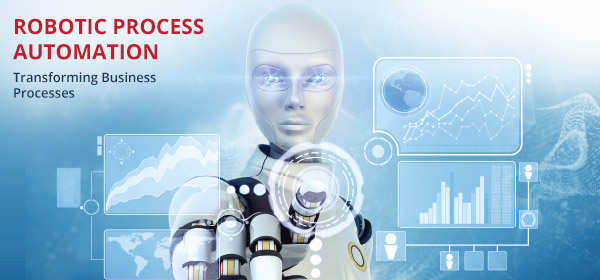
R for Robotic Process Automation

Robotic process automation (RPA) is the application of technology that allows employees in a company to configure computer software or a “robot” to capture and interpret existing applications for processing a transaction, manipulating data, triggering responses and communicating with other digital systems.


Any company that uses labor on a large scale for general knowledge process work, where people are performing high-volume, highly transactional process functions, will boost their capabilities and save money and time with robotic process automation software.

Just as industrial robots are remaking the manufacturing industry by creating higher production rates and improved quality, RPA “robots” are revolutionizing the way we think about and administer business processes, IT support processes, workflow processes, remote infrastructure and back-office work. RPA provides dramatic improvements in accuracy and cycle time and increased productivity in transaction processing while it elevates the nature of work by removing people from dull, repetitive tasks.

The technology of RPA can be applied specifically to a wide range of industries.

Process automation

Technologies like presentation-layer automation software – a technology that mimics the steps of a rules-based, non-subjective process without compromising the existing IT architecture – are able to consistently carry out prescribed functions and easily scale up or down to meet demand. Process automation can expedite back-office tasks in finance, procurement, supply chain management, accounting, customer service and human resources, including data entry, purchase order issuing, creation of online access credentials, or business processes that require “swivel-chair” access to multiple existing systems.

IT support and management

Automated processes in the remote management of IT infrastructures can consistently investigate and solve problems for faster process throughput. RPA can improve service desk operations and the monitoring of network devices. Separating scalability from human resources allows a company to handle short-term demand without extra recruiting or training.

Automated assistant

As in voice recognition software or automated online assistants, developments in how machines process language, retrieve information and structure basic content mean that RPA can provide answers to employees or customers in natural language rather than in software code. This technology can help to conserve resources for large call centers and for customer interaction centers.

As RPA brings more technologically-advanced solutions to businesses around the world, operating models that adopt automation, whether in-house or offshored, will cut costs, drive efficiency and improve quality.

Thursday, April 19, 2018

Q for Quantum Computing!


Quantum Computing


Ø Quantum Computer
Ø A computer that uses quantum mechanical phenomena to perform operations on data through devices such as superposition and entanglement.
Ø A quantum computer is a machine that performs calculations based on the laws of quantum mechanics, which is the behavior of particles at the sub-atomic level.
Ø Classical Computer (Binary)
Ø A computer that uses voltages flowing through circuits and gates, which can be calculated entirely by classical mechanics.
The Need for Speed:
Ø Classical Digital Computer
Ø Moore’s Law: # of transistors on chip doubles every 18 months—microprocessor circuits will measure on atomic scale by 2020-2030
Ø Downscaling of circuit board layout/components is leading to discrepancies.
Ø Copper traces are actually crystallizing and shorting out!
Ø Emergence of quantum phenomena such as electrons tunneling through the barriers between wires.
Ø Serial Processing – one operation at a time
Ø 64-bit classical computer operates speeds measured in gigaflops (billions of floating-point operations per second).
Ø Quantum Computer
Ø Harnesses the power of atoms and molecules to perform memory and processing tasks
Ø Parallel Processing – millions of operations at a time
Ø 30-qubit quantum computer equals the processing power
of conventional computer that running at 10 teraflops
(trillions of floating-point operations per second).
Classical vs Quantum Bits
Ø Classical Bit
Ø 2 Basic states – off or on: 0, 1
Ø Mutually exclusive
Ø Quantum Bit (Qubit)
Ø 2 Basic states – ket 0, ket 1:
Ø Superposition of both states –
(not continuous in nature)
Ø Quantum entanglement
Ø 2 or more objects must be described in reference to one another
Ø Entanglement is a non-local property that allows a set of qubits to express superpositions of different binary strings (01010 and 11111, for example) simultaneously

Quantum Computing Power
Ø Integer Factorization
Ø Impossible for digital computers to factor large numbers which are the products of two primes of nearly equal size
Ø Quantum Computer with 2n qubits can factor numbers with lengths of n bits (binary)
Ø Quantum Database Search
Ø Example: To search the entire Library of Congress for one’s name given an unsorted database...
Ø Classical Computer – 100 years
Ø Quantum Computer – ½ second

Practical Quantum Computer Applications
Ø Quantum Mechanics Simulations
Ø physics, chemistry, materials science, nanotechnology, biology and medicine.
Ø Computer can compute millions of variables at once.
Ø All are limited today by the slow speed of quantum mechanical simulations.
Ø Cryptoanalysis
Ø Capable of cracking extremely complicated codes
Ø RSA encryption
Ø Typically uses numbers with over 200 digits

Quantum Computing History
Ø 1973 - Alexander Holevo publishes paper showing that n qubits cannot carry more than n classical bits of information.
Ø 1976 - Polish mathematical physicist Roman Ingarden shows that Shannon information theory cannot directly be generalized to the quantum case.
Ø 1981 - Richard Feynman determines that it is impossible to efficiently simulate a evolution of a quantum system on a classical computer.
Ø 1985 - David Deutsch of the University of Oxford, describes the first universal quantum computer.
Ø 1993 - Dan Simon, at Universite de Montreal, invents an oracle problem for which quantum computer would be exponentially faster than conventional computer. This algorithm introduced the main ideas which were then developed in Peter Shor's factoring algorithm.
Ø 1994 - Peter Shor, at AT&T's Bell Labs discovers algorithm to allow quantum computers to factor large integers quickly. Shor's algorithm could theoretically break many of the cryptosystems in use today.
Ø 1995 - Shor proposs the first scheme for quantum error correction.
Ø 1996 - Lov Grover, at Bell Labs, invents quantum database search algorithm.
Ø 1997 - David Cory, A.F. Fahmy, Timothy Havel, Neil Gershenfeld and Isaac Chuang publish the first papers on quantum computers based on bulk spin resonance, or thermal ensembles. Computers are actually a single, small molecule, storing qubits in the spin of protons and neutrons. Trillions of trillions of these can float in a cup of water.
Ø 1998 - First working 2-qubit NMR computer demonstrated at University of California, Berkeley.
Ø 1999 - First working 3-qubit NMR computer demonstrated at IBM's Almaden Research Center. First execution of Grover's algorithm.
Ø 2000 - First working 5-qubit NMR computer demonstrated at IBM's Almaden Research Center.
Ø 2001 - First working 7-qubit NMR computer demonstrated at IBM's Almaden Research Center.
First execution of Shor's algorithm. The number 15 was factored using 1018 identical
molecules, each containing 7 atoms.

Candidates for Quantum Computers
Ø Superconductor-based quantum computers
(including SQUID-based quantum computers)
Ø Ion trap-based quantum computers
Ø "Nuclear magnetic resonance on molecules in solution"-based
Ø “Quantum dot on surface"-based
Ø “Laser acting on floating ions (in vacuum)"-based (Ion trapping)
Ø "Cavity quantum electrodynamics" (CQED)-based
Ø Molecular magnet-based
Ø Fullerene-based ESR quantum computer
Ø Solid state NMR Kane quantum computer
 Quantum Computing Problems
Ø Current technology
Ø ≈ 40 Qubit operating machine needed to rival current classical equivalents.
Ø Errors
Ø Decoherence -  the tendency of a quantum computer to decay from a given quantum state into an incoherent state as it interacts with the environment.
Ø Interactions are unavoidable and induce breakdown of information stored in the quantum computer resulting in computation errors.
Ø Error rates are typically proportional to the ratio of operating time to decoherence time
Ø operations must be completed much quicker than the decoherence time.


Research References
Ø http://www.qubit.org
Ø http://www.cs.caltech.edu/~westside/quantum-intro.html
Ø http://computer.howstuffworks.com/quantum-computer1.htm
Ø http://en.wikipedia.org/wiki/Quantum_computers
Ø http://www.carolla.com/quantum/QuantumComputers.htm